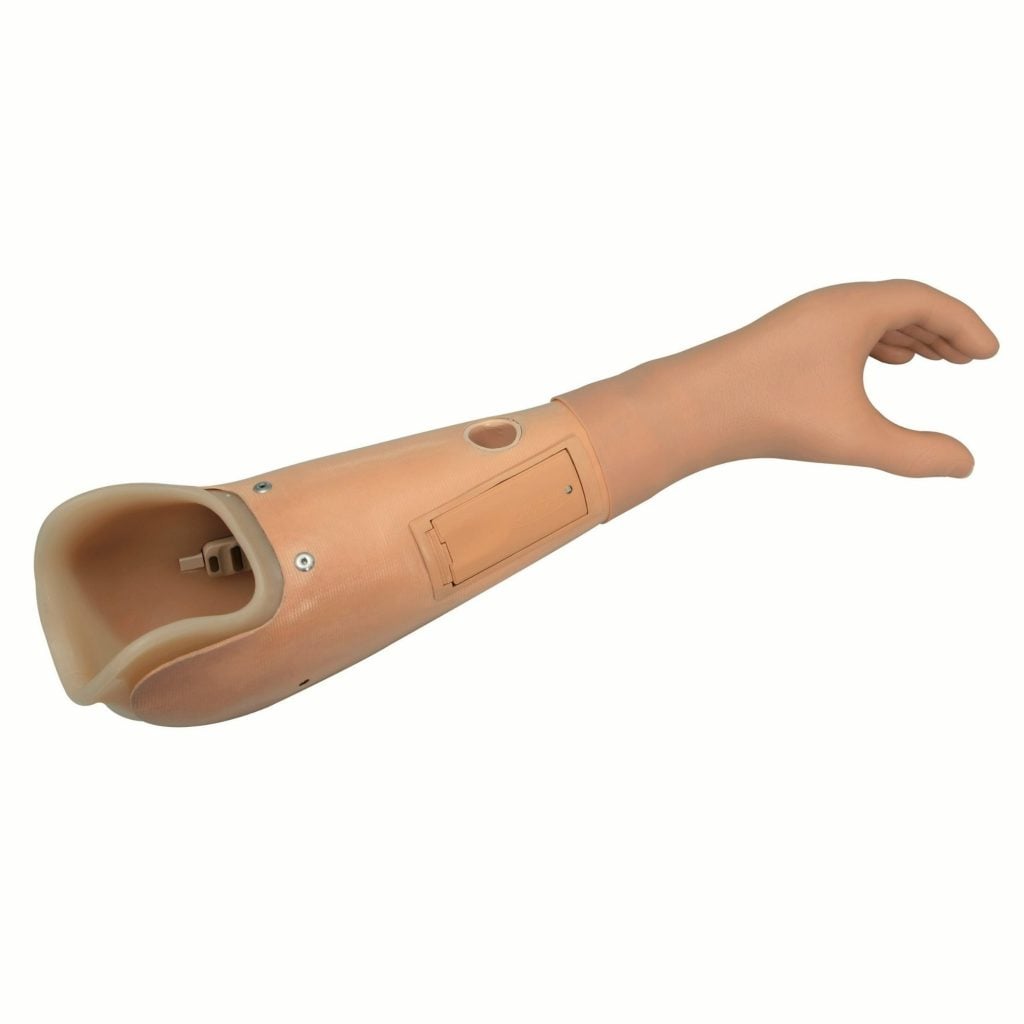
In cases where bodily integrity is lost, upper extremity prosthetics play a vital role in enabling individuals to continue their daily life activities independently. The amputation level is the most fundamental factor directly affecting the architecture, control mechanisms, and rehabilitation process of the prosthesis to be used. Specifically, the below elbow vs above elbow prosthetic …
In cases where bodily integrity is lost, upper extremity prosthetics play a vital role in enabling individuals to continue their daily life activities independently. The amputation level is the most fundamental factor directly affecting the architecture, control mechanisms, and rehabilitation process of the prosthesis to be used. Specifically, the below elbow vs above elbow prosthetic arm differences encompass major distinctions in terms of both mechanical design and the integration of bionic technologies. In this comprehensive guide, we will examine in detail the key differences, mechanical structures, and adaptation processes between both levels.
The selection of the right technology in upper extremity applications is made based on the individual’s muscle strength, residual limb condition, and daily life expectations. For patients going through this process for the first time, our page on How to Choose the First Prosthetic Arm? Comprehensive Evaluation Guide features detailed evaluation criteria. Additionally, you can review our content titled What to Consider When Choosing a Prosthetic Center? for points to watch out for during the center selection stage.
Table of Contents
ToggleBelow-Elbow Systems
At the below-elbow amputation level, the individual’s own elbow joint and a portion of the forearm muscles are preserved. This situation provides a massive advantage in prosthetic applications and control processes. Below-elbow systems are generally lighter structures that are more intuitive to use.
Anatomical Advantages and Preserved Muscles
The biggest plus at the below-elbow level is the complete preservation of natural elbow movement. Since some muscle groups providing forearm rotation movements remain in place, electrical signals or mechanical movements emitted from these muscles can be directly transferred to the prosthesis. Thus, the user can bend and rotate the arm along its natural axis without needing an external mechanism.
The preservation of strong muscle structure provides high precision, especially in the use of myoelectric systems. Electrodes placed on the skin surface detect muscle contractions, allowing wrist and finger movements to be executed. This significantly shortens the learning curve and makes it easier for the device to be embraced as a part of the body.
Socket Design and Ease of Daily Use
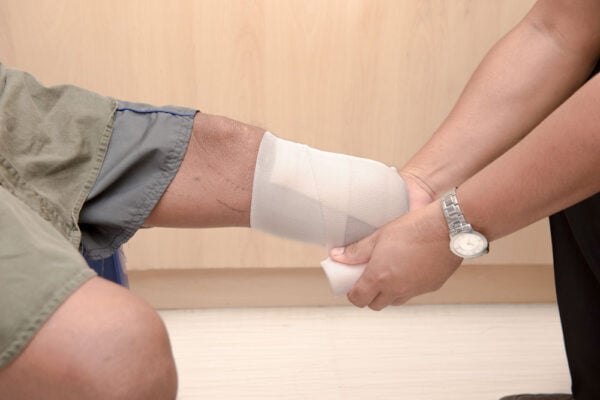
In below-elbow prostheses, the socket design is custom-produced according to the shape and length of the residual limb. Thanks to the ergonomic structure of the socket, the device can be worn comfortably throughout the day. Having the center of gravity close to the body keeps the load on the shoulder and back muscles to a minimum during long-term use.
Tasks requiring fine motor skills in daily life activities, such as eating, writing, or grasping objects, are learned in a much shorter time with below-elbow systems. The user can securely hold various objects by fixing the prosthetic wrist at different angles and rapidly adapt to social life.
Above-Elbow Systems
In above-elbow amputations, since the entire elbow joint is lost, mechanically more complex structures must be designed. It is essential to integrate an artificial elbow joint into the system so that the arm can perform both carrying and lifting functions.
Complex Mechanical Structure and Engineering
At the above-elbow level, joint systems are needed to fulfill the function of the elbow joint. These joints are equipped with mechanisms that can be locked or moved freely according to the user’s request. From an engineering perspective, keeping these systems lightweight while maintaining a high carrying capacity requires great balance.
As the complexity of the system increases, the amount of energy the user expends to manage the device also rises. Therefore, ensuring that the socket structure fits the residual limb perfectly and adjusting the harness systems correctly is extremely important for a balanced weight distribution. Expert technicians determine mechanical or electronic elbow modules suitable for each patient’s muscle strength.
Rehabilitation and Adaptation Process
For above-elbow prosthesis users, the adaptation process requires more patience and physical therapy compared to below-elbow users. Control of both the elbow joint and the wrist must be learned separately. Coordination studies performed with physiotherapists play a key role in helping the patient adapt to the new body geometry.
At this stage, it is essential for the patient to exercise regularly to develop muscle memory and apply different control commands sequentially. With proper guidance and patient effort, users can reach a level where they can perform their daily tasks independently.
Prosthetic Elbow Joint
While the prosthetic elbow joint forms the heart of above-elbow systems, this component is not needed in below-elbow systems. Developments in joint technology directly affect users’ capacity to bend and carry the arm.
Mechanical and Locking Elbows
Mechanical elbow joints are economical and durable systems that allow the user to lock at specific angles using body movements or with the help of the opposite arm. These joints generally offer high stability when it is necessary to carry heavy objects. The user can safely lift loads after securing the elbow.
Locking mechanisms are activated via a simple cable-pull system or body movements. Although it provides a secure grip in daily life, it requires more physical effort compared to electronic systems in terms of movement fluidity.
Externally Powered and Smart Joint Systems
High-tech smart elbow joints mimic natural arm movement by detecting the user’s muscle signals. Thanks to weight sensors and microprocessors, these systems automatically adjust the bending speed and resistance of the arm.
Smart joints ensure that the user gets tired much less during daily activities. However, the weight of these systems may be slightly more than mechanical models; therefore, they should be preferred by evaluating the patient’s muscle strength.
Control Methods
The technologies used to direct prosthetic arms vary depending on the amputation level and the patient’s physical capacity. The correct control method maximizes the functionality of the device.
Body-Powered Control
Cable systems operating with shoulder and back movements are one of the classic and most reliable control methods. The user moves the shoulder girdle forward to tension the cable, thereby allowing the prosthetic hand to open and close.
The biggest advantage of these systems is that they do not require battery charging, are water-resistant, and are resistant to external factors with their extremely durable structure. High physical feedback makes it easier for the user to feel the force applied to the object.
Myoelectric and Microprocessor-Controlled Systems
Myoelectric control is based on the principle that electrical signals produced during the contraction of muscles remaining on the residual limb are detected by electrodes. These signals are transmitted to the microprocessor, ensuring precise movement of the prosthetic hand’s fingers.
Whichever muscle the user tightens, the prosthesis receives a command in that direction and operates. This method offers an experience closest to natural movement and provides the user with great self-confidence aesthetically.
Weight and Energy
The weight of the device and the energy expended by the user are the most important physical criteria determining comfort in prosthetic arm selection. Each level has its own unique weight balance.
Impact of Device Weight on Body Ergonomics
The total weight of the prosthetic arm varies depending on the motors, batteries, and joint mechanisms it contains. Below-elbow prostheses are generally lighter due to their length and containing fewer parts. Above-elbow prostheses, on the other hand, place more load on the shoulder region due to joint modules and additional weights.
Adjusting the weight balance correctly is of critical importance to protect the user’s spine health and prevent fatigue that may occur at the end of the day. Expert technicians minimize this load by optimizing weight distribution within the socket.
Energy Consumption and Daily Fatigue Share
Energy consumption differs at both prosthetic levels. Below-elbow users expend much less effort because they possess a natural elbow joint. Above-elbow users, however, may get tired more quickly in the first few months since they have to both carry the weight and coordinate joint movements.
Thanks to muscle memory and endurance developed over time, this feeling of fatigue decreases. Regular physiotherapy and ergonomic usage habits are fundamental elements increasing energy efficiency.
Training and Adaptation
If half of a successful prosthetic application is correct engineering, the other half is a comprehensive rehabilitation and training process. The user’s adoption of their new limb happens step by step.
Physiotherapy and Functional Exercises
The training process starting after the prosthesis is delivered is of vital importance to increase the patient’s harmony with the device. Balance, grasping, and releasing exercises performed with physiotherapists strengthen communication between the brain and the prosthesis.
Especially at the above-elbow level, practices of locking and unlocking the joint are repeated thousands of times to become a reflex. For below-elbow users, concentration is mostly focused on finger precision and force adjustment.
Return to Social Life and Psychological Support
The post-amputation process requires not only physical but also psychological adaptation. The user’s return to social life, business life, and daily routines is directly related to the freedom offered by the prosthesis.
Throughout all processes conducted in our clinic, professional guidance is provided that makes our patients feel they are not alone. Individuals receiving proper training quickly become active members of their social circles.
Frequently Asked Questions
The most fundamental difference is whether the elbow joint is preserved. Since the natural elbow joint remains in below-elbow prostheses, movement control is easier; in above-elbow prostheses, an artificial elbow joint must be integrated into the system.
In general, getting used to below-elbow prostheses is faster and easier. Because at this level, some of the arm’s natural movement capability is preserved and the device’s weight is lower.
Yes, myoelectric control systems can be successfully applied in both below-elbow and above-elbow amputations. Appropriate electrode placement is planned according to the strength and location of muscle signals.
A correctly chosen and custom-produced prosthetic arm does not restrict daily life; on the contrary, it grants great independence. Basic activities such as eating, writing, and holding objects can be easily performed.
Yes, receiving adaptation training accompanied by professional physiotherapy is extremely important for the correct and efficient use of the device. This process greatly contributes to the development of muscle memory.