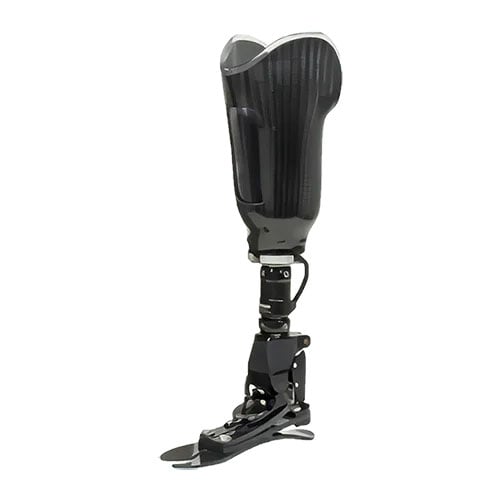
The amputation level is the most critical factor directly affecting an individual's mobility in daily life, the components to be used, and the rehabilitation process. In this context, the below knee vs above knee prosthesis comparison is not just a physical level distinction but encompasses entirely different mechanical, biomechanical, and metabolic dynamics. As Luxmed, we …
The amputation level is the most critical factor directly affecting an individual’s mobility in daily life, the components to be used, and the rehabilitation process. In this context, the below knee vs above knee prosthesis comparison is not just a physical level distinction but encompasses entirely different mechanical, biomechanical, and metabolic dynamics. As Luxmed, we care about our patients understanding this process in the most conscious way and setting out with the right expectations in light of clinical facts. Regardless of the level, it is possible for individuals to move independently thanks to technological developments. At every stage of the process, you must consult your specialist physicians and orthotists-prosthetists.
Table of Contents
ToggleStructure in Below-Knee Amputation
Below-knee amputation is medically termed transtibial and is the surgical level where the knee joint is preserved. This structural advantage allows the user to preserve their own knee movement and largely facilitates movement control using a transtibial prosthesis.
Stump Anatomy and Weight Bearing
At the below-knee level, the condition of the tibia and fibula bones, the length of the stump, and muscle balance determine the prosthesis fit. The stump end and the patellar tendon region play an active role in bearing body weight supported by a well-fitted socket.
Biomechanical Advantages
Preserving the natural knee joint minimizes loss of balance when going up and down stairs and walking on uneven terrain. This allows the user to develop a more symmetrical walking pattern tailored to their rehabilitation needs.
Structure in Above-Knee Amputation
Above-knee amputation is known as transfemoral and is the surgical level resulting from the transection of the femur bone. Since the natural knee joint is eliminated at this level, the entire kinematic system needs to be supported by artificial components such as a transfemoral prosthesis and a specialized knee unit.
Femur Bone and Muscle Control
The length of the thigh bone directly affects the leverage effect of the hip muscles that will control the prosthesis. Long stumps provide users with more control and stability.
Balance and Sitting Dynamics
The absence of the natural joint makes it mandatory for the hip muscles and artificial mechanisms to work in coordination during basic movements such as sitting, standing up, and changing direction. This level requires special engineering in prosthetic leg applications.
Energy Demand
As the amputation level rises—meaning the number of lost joints increases—the metabolic energy expended during walking also increases proportionally.
Metabolic Cost Comparison
Studies show that individuals with a history of above-knee amputation expend significantly more calories and oxygen while walking compared to those at the below-knee level. This affects fatigue times.
Solutions Increasing Energy Efficiency
Advanced microprocessor components and lightweight carbon fiber materials help reduce this high energy requirement expended by users. Proper prosthetic leg care also supports the efficient operation of the device.
Knee Joint Requirement
One of the most complex and engineering-intensive parts of prosthesis technology is artificial knee joints, and this component constitutes the biggest difference between levels.
No Need for a Joint in Below-Knee
There is no need for an artificial knee joint in below-knee prostheses; instead, foot and ankle components provide flexibility and absorb the load, often integrating a dynamic prosthetic foot.
Mechanical and Microprocessor Knees in Above-Knee
In above-knee systems, hydraulic, pneumatic, or microprocessor artificial knee joints are used. These joints automatically control stepping speed and the risk of falling.
Socket and Suspension
Socket and suspension systems establishing the connection between the stump and the prosthesis are vital for comfort and safe walking.
Socket Design Differences
While below-knee sockets bear weight over the patellar tendon, above-knee sockets are designed with ischial support or total surface contact. Poor fit can form the basis for why a prosthetic socket causes pain.
Suspension Systems
Silicone liners, pin systems, or vacuum technologies can be used at both levels. Getting detailed information on silicone liner selection in below-knee prostheses increases suspension comfort.
Rehabilitation Differences
The amputation level directly determines the duration and difficulty level of the physical therapy and adaptation process after surgery.
Fit and Gait Training Durations
Below-knee users establish balance faster thanks to their natural knee joints, and the process of getting used to the prosthetic leg is generally shorter. At the above-knee level, learning to trust the artificial knee takes time.
Clinical Follow-Up and Exercises
Muscle strengthening and proprioception exercises are essential in both groups. Throughout the process, the answer to what to consider when choosing a prosthesis center affects the quality of rehabilitation to be received.
References
Frequently Asked Questions
The most fundamental difference is whether the natural knee joint is preserved. In below-knee prostheses, your own knee remains, whereas above-knee prostheses require the use of an artificial knee joint.
Since the natural knee joint is preserved in below-knee prostheses, establishing balance and learning to walk generally happens faster and easier compared to the above-knee level.
The necessity of controlling multiple joints with artificial mechanisms and hip muscles expending extra effort increases the metabolic energy requirement and fatigue rate.
Yes, depending on the anatomical structure of the stump, below-knee sockets have different weight-transfer points, while above-knee sockets are designed to match the thigh and hip structure.
Although the rehabilitation logic is similar, above-knee prosthesis users need time to learn to trust the artificial knee joint and perform balance exercises.