In every aspect of our lives, our hands and fingers are the most critical organs that allow us to interact with our environment. However, hand or finger amputation resulting from work accidents, home accidents, or traumatic events is a physically and psychologically devastating condition. When facing an emergency, having the right knowledge and knowing that …
In every aspect of our lives, our hands and fingers are the most critical organs that allow us to interact with our environment. However, hand or finger amputation resulting from work accidents, home accidents, or traumatic events is a physically and psychologically devastating condition. When facing an emergency, having the right knowledge and knowing that seconds count is of vital importance. Especially finger amputation first aid practices are the most fundamental step directly affecting the patient’s future hand functions.
In these cases, also known as traumatic amputations, early intervention and storing the severed part under correct conditions significantly increase the chance of surgical success. Thanks to developing microsurgical techniques, replantation—meaning the reattachment of the severed limb—is possible in many cases. However, replantation may not be successful or deemed medically appropriate in every amputation case. In such cases, advanced technological solutions are utilized to improve patients’ quality of life. For example, as discussed in our article Which Prosthesis is Chosen After Finger Amputation? Silicone and Functional Options, aesthetic and functional prostheses play a major role in helping patients return to daily life. In this guide, we will examine in detail what needs to be done during a trauma, storage techniques, and treatment processes.
Table of Contents
ToggleFirst aid at the moment of amputation
In the event of a hand or finger amputation, a race against seconds begins. Initial intervention at the scene is critical both for stopping bleeding and preserving the vitality of the severed tissue.
Acting without panic reduces the patient’s life threat while also making the surgical team’s job easier. Staying calm and notifying professional emergency rescue teams is the first step to take.
Controlling the bleeding
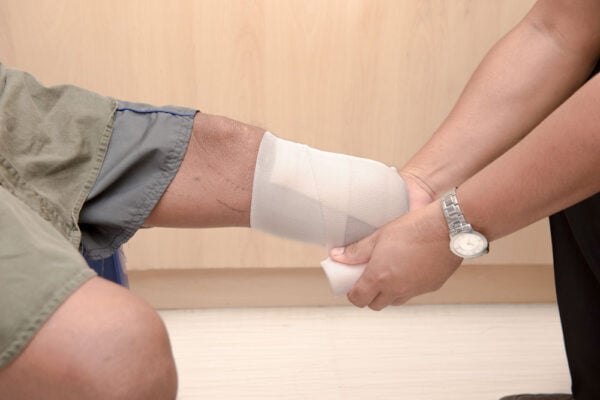
Severe arterial bleeding may be observed in the severed limb region. In this case, direct pressure should be applied to the injured area with a clean cloth or gauze compress. Applying a tourniquet should definitely be considered as a last resort and only under professional guidance, as leaving it on longer than necessary can lead to tissue necrosis.
The injured hand should be kept above heart level to try and reduce the bleeding rate. The patient showing signs of shock should have their legs raised slightly to ensure an open airway while awaiting emergency medical teams.
Ensuring the safety of the patient and the wound
To prevent the injured person from getting infected, the open wound area should not be touched with dirty materials. Before pouring antiseptic solutions directly onto the wound, one should wait for the guidance of healthcare personnel.
The patient should be seated or laid down, and sudden movements should be avoided. A patient in psychological shock should be reassured, and their level of consciousness should be continuously monitored.
How to store the severed limb?
Storing the severed finger or hand tissue correctly is the most critical factor regarding the reattachability (replantation) of the limb. Incorrect storage conditions cause the tissue to undergo cell death (ischemia).
The severed part must never be allowed to come into direct contact with ice. Frozen tissues become unsalvageable by microsurgery.
Cleaning and wrapping the severed part
The severed finger or hand part should be gently washed with sterile saline solution, if available, and gross dirt on it should be removed. Antiseptic solutions, alcohol, or cologne should never be used because these chemicals damage blood vessels and nerve endings.
The cleaned part should be wrapped in a clean, damp gauze or towel. Sterile water or saline solution should be preferred for the moisturizing process.
Cold chain application and transportation
The part wrapped in a damp cloth should be placed in a clean, watertight plastic bag or pouch. This bag should be placed into a second container containing a mixture of ice and water.
The ideal storage temperature is around 4 degrees Celsius. It should be ensured that the part is delivered to the surgical team on the way to the hospital by preventing direct contact with ice.
Transportation to the hospital
The severed limb and the patient must be transported as soon as possible to a center equipped to perform microsurgery. The time factor is the biggest determinant of success.
During the transportation process, the patient’s general condition should be closely monitored, and the information in the guide What is Traumatic Amputation? Emergency Process and Aftermath should be taken into account when necessary.
Choosing the right hospital
Not every hospital has the microsurgical infrastructure to perform finger reattachment operations. Therefore, 112 Emergency Service teams should be called to request redirection to the nearest and appropriately equipped orthopedics and traumatology clinic.
To avoid wasting time, wrong hospitals should not be visited, and centers with direct hand surgery and microsurgery units should be preferred.
Things to consider during shipment
During transport by ambulance, the patient’s intravenous line should be kept open and fluid support should be provided. The box or bag containing the severed limb should be transported carefully in the same vehicle with the patient.
Clear information should be given to the shipment team about when the accident occurred, the patient’s additional diseases, and the medications they use.
Is replantation possible?
Replantation is the procedure of sewing a severed limb back to its anatomical place using microsurgical methods. However, this operation may not be medically appropriate in every amputation case.
The type of injury, the patient’s general health status, and the condition of the severed part affect this decision. The rehabilitation process after replantation is as long and arduous as the question Are Silicone Finger Prostheses Movable? What Do They Provide in Daily Use?.
Eligibility criteria for replantation
The amputation being a clean cut (guillotine type) without crushing and fragmentation increases the chance of success. In multi-finger amputations or thumb losses, replantation is almost always tried as a priority.
Factors such as the patient’s age, general systemic diseases, and smoking affect the surgeon’s decision. The chance of success may decrease in smokers since the risk of vascular spasm is high.
Situations where replantation cannot be performed
In cases of severe crush injuries, or when the limb remains in ischemia for a long time (exceeding 6 hours in a warm environment, 12-18 hours in a cold environment), replantation may not be recommended.
In multiple trauma cases where the patient’s life is in danger, priority is saving life. In such cases, prosthetic solutions are evaluated in the subsequent process.
Factors affecting replantation success
The success of the microsurgical operation depends not only on the skill of the surgeon but also on many different variables. These factors directly shape the outcome of the surgery.
The following table summarizes the key factors and characteristics affecting the replantation process:
Time and temperature factor
The shorter the ischemia time—meaning the time the limb remains without blood supply—the higher the chance of success. Tissues waiting at room temperature quickly lose cells.
This period can be slightly more flexible in tissues stored in accordance with cold chain rules, but the first hours are still the most precious time frame.
Injury mechanism and surgical technique
Injuries caused by cutting tools yield much better results compared to crush or avulsion-style injuries in machinery. Repair becomes difficult in crushes because vessel and nerve walls are also crushed.
In operations performed by experienced microsurgeons, vascular, neural, tendon, and bone structures are meticulously joined under operating microscopes.
When a prosthesis is an option
In cases where replantation fails or cannot be performed medically, prosthetic technologies come into play to preserve patients’ quality of life. Choosing the right product at this stage is of great importance.
Among the solutions we offer clinically are modern alternatives that you can review from our Products page. You can also get detailed information about custom-made aesthetic and functional products.
Aesthetic and silicone prostheses
Custom silicone prostheses are produced to facilitate the patient’s adaptation to social life in finger losses. These prostheses seamlessly match the color, nail structure, and lines of the healthy hand.
Offering high comfort in daily use, these products are also an important support element in helping patients psychologically overcome the trauma.
Functional and technological solutions
Mechanical or bionic systems come into play in higher-level limb losses. Advanced bionic hand systems, such as Ottobock Bebionic, allow the user to grasp objects by detecting muscle signals.
Thanks to these technological systems, patients can continue their work and daily life activities independently.
Frequently Asked Questions
No, a severed finger should never be placed directly into ice. Direct ice contact leads to frostbite injury in the tissues, causing irreversible cell death. The part should be wrapped in a damp cloth and then placed in water.
The ideal time is 6 hours at room temperature. However, for fingers stored under correct cold chain conditions, this period can be extended up to 12 to 18 hours. Still, applying to an equipped center without wasting time is essential.
The success of replantation depends on the type of injury, the patient’s general health status, and the experience of the microsurgery team. The chance of success may decrease in crush injuries and in individuals who smoke.
In cases where replantation is not possible, silicone finger prostheses or functional bionic hands can be preferred. These solutions aim to restore both the aesthetic appearance and the basic functions of the hand.
A tourniquet is not routinely recommended because its incorrect application can increase tissue loss. To stop bleeding, it is necessary to first apply direct pressure with a clean cloth and keep the injured limb above heart level.
Standard silicone finger prostheses have a passive structure and do not move on their own. However, in some special designs, mechanical finger joints compatible with the movement of the remaining finger stump can be used.