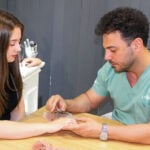
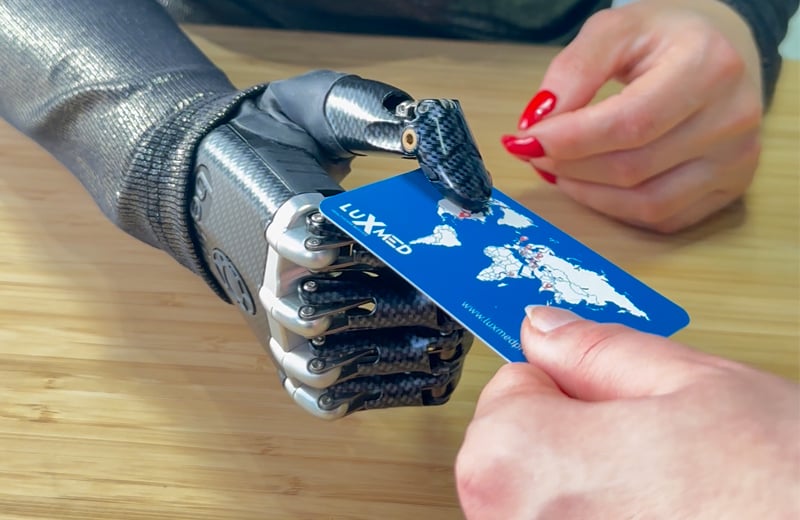
For individuals who have lost an arm due to accidents, illness or congenital conditions, custom-made prosthetic arm systems are designed to restore daily-life functions and improve quality of life.

By Amputation Level
Below Elbow or Above Elbow?
Your prosthesis is shaped by your amputation level. Understanding the difference between these two systems is the first step toward choosing the right one.
Below Elbow Prosthesis
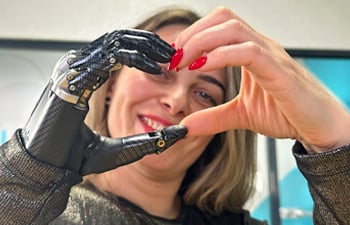
Used when the elbow joint is intact (transradial amputation). Because your natural elbow movement is preserved, both control and adaptation are significantly faster and easier.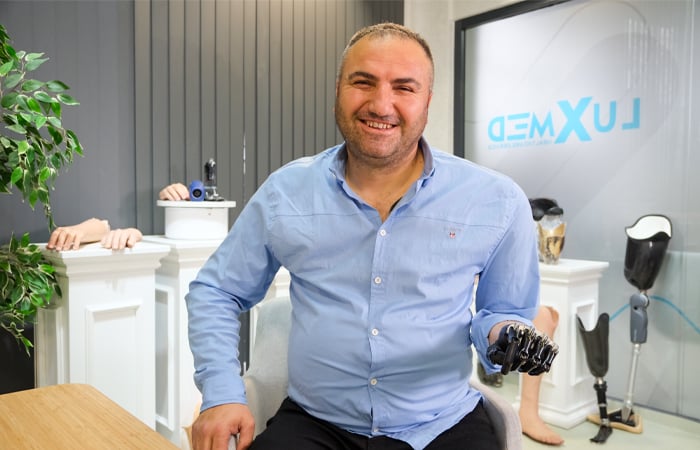
Above Elbow Prosthesis
Used when the elbow joint is also lost (transhumeral amputation). An artificial elbow joint is integrated into the system; this makes the design and adaptation process more comprehensive.Components in both systems
Socket
The custom-molded core component that contacts the residual limb.
Both levelsLiner
A silicone or gel inner sleeve that protects skin and ensures suspension.
Both levelsFrame
Lightweight, durable structural framework connecting all components.
Both levelsArtificial Elbow Joint
Provides flexion and extension. In myoelectric systems controlled by muscle signals.
Above elbow onlyTerminal Device — The Unit That Replaces Hand Function
Three terminal device options can be used at both prosthesis levels.
Mechanical Hand / Hook
Cable-driven, body-powered system controlled by shoulder movement. Durable and easy to maintain.
Myoelectric Hand
Works with sensors that read muscle signals. Provides natural opening and closing motions.
Bionic Hand Prosthesis
Advanced device that moves all 5 fingers independently. Offers 12 to 32 grip patterns.
By Technology Type
Prosthetic Arm Types
Different prosthetic arm systems are available based on intended use and technology level. Our specialists work with you to identify the option that best fits your needs.
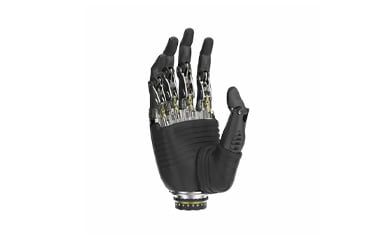
Bionic Arm Prosthesis
The most advanced prosthetic arm technology. Reads muscle signals from the residual limb and moves each finger independently.- 5 fingers moving independently
- 12 to 32 grip patterns
- Smartphone-adjustable settings
- Custom silicone glove in your skin tone
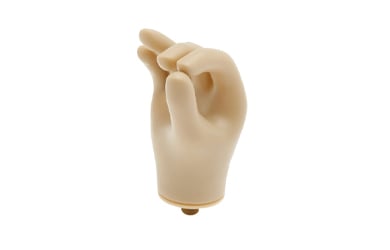
Myoelectric Arm Prosthesis
An electronic system powered by muscle electrical signals. The most functional widely available system after the bionic class.- Controlled by muscle (EMG) signals
- Natural grip and release motions
- Compatible with bionic hand upgrades
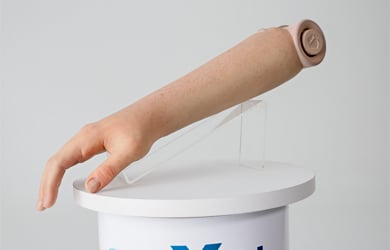
Silicone Hand Prosthesis
Aesthetic appearance is the priority. Skin tone, fingerprints and vein details are individually crafted to match the user’s sound hand.- Custom skin-tone matching
- Realistic fingerprint detail
- Everyday wearing comfort
Pricing Information
Prosthetic Arm Cost
Prosthetic arm pricing is determined individually. The amputation level, system type and the components selected directly shape the final cost.
€3,000 to €80,000
Final pricing depends on amputation level, system type, component brand and your individual anatomy. A body-powered mechanical below-elbow prosthesis sits at the lower end, while an advanced bionic above-elbow system sits at the higher end.
Entry
Body-powered mechanical
from €3,000
Mid-range
Myoelectric / Silicone hand
€10,000 – €30,000
Premium
Bionic hand
up to €80,000
Factors that affect the price
Production Process
How is a Prosthetic Arm Made?
Building a custom prosthetic arm is a precise process. From measurement to delivery, every step is carried out according to the individual’s anatomy and functional goals.
Bu gönderiyi Instagram’da gör
Evaluation & Measurement
Our specialists examine the residual limb, amputation level and anatomical structure. For myoelectric and bionic systems, muscle signal (EMG) mapping is performed to identify the strongest control points.Socket Casting & Test Fitting
A custom socket is built using either a plaster cast or a digital 3D scan of the residual limb. A test prosthesis is fitted and refined based on the patient’s feedback for maximum comfort.Component Selection & Programming
The terminal device — mechanical hook, myoelectric hand or bionic hand — is selected based on your goals. Sensor positions are calibrated and grip patterns are programmed for natural control.Delivery & Training
The final prosthesis is delivered and personalized training is provided — including muscle-signal control for myoelectric systems. Follow-up adjustments are scheduled to ensure long-term comfort.International Service
Luxmed in 40 Countries
You don’t need to travel across continents to receive your custom prosthetic arm. With our mobile service network covering 40 countries, our specialists come directly to you.