Navigating the journey of finding an effective, aesthetic, and life-enhancing upper limb solution often leads patients to explore international options. Understanding the silicone finger prosthesis cost in Turkey 2026 requires a comprehensive look at modern advancements, clinical expertise, and individualized manufacturing processes. Turkey has rapidly emerged as a global hub for advanced medical technologies, including …
Navigating the journey of finding an effective, aesthetic, and life-enhancing upper limb solution often leads patients to explore international options. Understanding the silicone finger prosthesis cost in Turkey 2026 requires a comprehensive look at modern advancements, clinical expertise, and individualized manufacturing processes. Turkey has rapidly emerged as a global hub for advanced medical technologies, including highly realistic silicone prosthetics that restore both functional capability and psychological confidence. Whether dealing with partial amputations from workplace accidents, congenital differences, or medical conditions, patients seek high-end craftsmanship coupled with cost-effectiveness.
When planning for a custom-made device, various elements influence the final investment. At specialized centers like Luxmed Protez, multidisciplinary teams work meticulously to match skin tones, recreate minute details like fingerprints and veins, and ensure secure attachment methods. Beyond the monetary aspect, investing in a high-grade artificial finger transforms daily routines, enabling individuals to type, write, grip objects, and interact socially without hesitation. This guide explores everything you need to know about pricing, materials, clinical steps, and post-fitting care for silicone fingers in Turkey for 2026.
Table of Contents
ToggleCost factors
Evaluating the financial commitment associated with artificial limb solutions involves analyzing several distinct variables. The silicone finger prosthesis cost in Turkey 2026 is never a one-size-fits-all figure; rather, it reflects a bespoke medical manufacturing process tailored to each individual’s anatomical needs. Several primary components dictate the final pricing structure for patients traveling to Istanbul or other major medical hubs.
First, the extent of the amputation plays a significant role. Replacing a single distal phalanx requires fewer materials and less intricate artistic detailing compared to a multi-finger or partial hand restoration. Second, the complexity of the color-matching process heavily influences the cost. Advanced medical-grade silicone must be layered, tinted, and baked multiple times to replicate the patient’s unique vascular patterns, freckles, and undertones. Additionally, the chosen attachment mechanism—whether relying on bony suction, bone anchorage, or skin-safe medical adhesives—directly impacts the labor and engineering required during the fitting stage.
Materials and Pigmentation Complexity
The quality of the silicone used is paramount to the longevity, flexibility, and hyper-realistic appearance of the prosthesis. High-grade medical silicone mimics the natural elasticity and texture of human skin, reacting similarly to environmental temperatures and pressures. Achieving this level of realism requires specialized medical artists who hand-paint individual pigment layers into the silicone matrix. This meticulous artisan work increases the overall value of the device, ensuring that under close inspection, the artificial finger is virtually indistinguishable from a biological one. Patients also receive guidance on how different silicone densities affect flexibility versus durability during daily activities.
Furthermore, customized nail beds add another layer of craftsmanship. Technicians embed actual acrylic or custom-molded silicone nails that can be trimmed, filed, and polished just like natural nails. This attention to detail justifies the investment, as mass-produced alternatives simply cannot replicate the subtle translucency and cuticle detailing required for a truly seamless appearance. Patients can learn more about how advanced materials compare by reviewing options available under our main Silicone Prosthesis category.
Technological and Clinical Expertise Fees
The expertise of the clinical team and the technological infrastructure of the facility significantly shape the financial landscape. Cutting-edge clinics employ 3D scanning, digital modeling, and precise casting techniques to eliminate guesswork during the initial evaluation. Experienced prosthetists who specialize exclusively in upper extremity restorations bring years of anatomical knowledge, ensuring that the residual stump receives appropriate pressure distribution and comfort.
Clinic overhead, international patient coordination services, translator support, and post-fitting adjustment sessions are also factored into comprehensive treatment packages. While budget-oriented options might appear tempting, investing in a specialized clinic guarantees long-term structural integrity, hypoallergenic materials, and dedicated follow-up care that prevents skin irritation and socket breakdown. For broader context on how medical tourism pricing in Turkey compares across different prosthetic fields, you can reference our detailed insights on Prosthetic Leg Cost in Turkey 2026.
Partial and complete finger loss
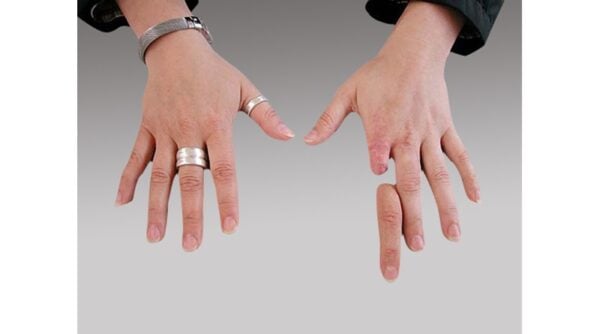
The anatomical level of amputation dictates both the engineering approach and the overall prosthetic design. Whether an individual has experienced a partial finger loss involving only the tip or a complete loss extending to the metacarpal joint, modern silicone technology offers remarkable solutions. Understanding these categories helps patients set realistic expectations regarding functionality, stability, and aesthetic integration.
Complete finger loss requires a secure base, often utilizing the remaining palm structure or neighboring fingers to anchor the silicone socket securely. In contrast, partial losses often benefit from remaining bone length and proprioceptive feedback, allowing the silicone shell to slip snugly over the residual stump like a glove. Medical professionals carefully evaluate joint mobility, skin sensitivity, and scar tissue pliability before determining the optimal design strategy for each unique case.
Managing Partial Finger Amputations
Partial finger amputations frequently occur due to workplace injuries, crush accidents, or localized trauma. When the residual bone is intact, the prosthesis can utilize a passive suction fit or friction grip against the remaining phalanges. This design provides excellent stability without requiring invasive surgical procedures or chemical adhesives. Patients can easily put on and take off the device independently, making it highly practical for professional and personal environments.
During the consultation phase, prosthetists assess whether the residual stump experiences hypersensitivity or neuroma pain. Proper padding and soft silicone inner liners are integrated into the design to cushion sensitive nerve endings and prevent friction-induced skin breakdown. To explore related accidental trauma recovery and patient rights, visitors can read our guide on Limb Loss in a Workplace Accident: Prosthetics, Compensation, and Legal Rights.
Approaches for Complete Finger and Multi-Digit Loss
When an individual loses multiple fingers or an entire digit down to the palm, structural reinforcement becomes essential. Internal flexible wire armatures or titanium mesh supports are often embedded within the silicone finger to allow manual posing and basic resistance against lightweight objects. This allows the user to cup their hand, type on a keyboard, or hold everyday items like utensils and cups with greater natural alignment.
Clinical evaluations also account for the psychological impact of multi-digit loss. Restoring the complete visual symmetry of the hand significantly boosts self-esteem and reduces social anxiety. Patients are encouraged to consult with their physicians and prosthetists to determine the exact functional goals they wish to achieve with their custom artificial fingers. For more information on general upper limb options, you can review our dedicated Prosthetic Arm services.
Attachment methods
Securing a silicone finger prosthesis firmly in place while ensuring all-day comfort is a critical engineering challenge. Different attachment methods suit different anatomical shapes, activity levels, and personal preferences. Choosing the right fixation technique ensures that the prosthesis remains stable during rigorous movements without causing circulatory restriction or skin irritation.
Modern prosthetics rely on a mix of vacuum suction, mechanical interlocking with remaining bone structures, medical-grade skin adhesives, or custom-molded friction fits. Each method has distinct advantages regarding ease of application, holding strength, and skin compatibility. A comprehensive evaluation by an experienced prosthetist determines which technique aligns best with the patient’s lifestyle and physical condition.
Suction Fit and Friction Mechanisms
The most common and user-friendly attachment method is the precision-molded suction or friction fit. Because the silicone inner chamber is cast to the exact millimeter dimensions of the residual stump, it creates an airtight or snug seal that holds the device securely through simple mechanical grip. This method requires no messy glues, allows for rapid removal and cleaning, and is ideal for individuals with intact partial finger lengths.
Maintaining proper hygiene is vital when using suction-fit silicone prostheses to prevent moisture accumulation and bacterial growth. Patients are instructed to wash both their skin and the interior of the device daily using mild, pH-balanced soaps. For deeper clinical understanding regarding skin health and liner management, reference the guidelines discussed in Silicone Liner Selection for Below Knee Prostheses: Pin System vs. Vacuum System? A Comprehensive Guide.
Medical Adhesives and Osseointegration Options
For individuals with complete finger loss or smooth palm contours that lack natural bone anchors, medical-grade silicone adhesives provide a reliable alternative. These skin-safe adhesives bond the proximal opening of the prosthesis directly to the skin of the hand, holding it firmly in place even during active physical gestures. While applying adhesive requires an extra step during the morning routine, it offers ultimate aesthetic freedom with no visible straps or mounting rings.
In highly specialized surgical cases, bone-anchored (osseointegrated) fixtures can also be explored in consultation with orthopedic surgeons. This advanced technique bypasses the soft tissue interface entirely by connecting the prosthesis directly to a titanium implant fused with the bone. Patients considering advanced surgical integrations should always seek comprehensive medical evaluations, keeping in mind the expert recommendations outlined by organizations like the Amputee Coalition.
Color and nail detail
The hallmark of a premium silicone finger prosthesis lies in its hyper-realistic aesthetic execution. Achieving an exact visual match with the patient’s contralateral (healthy) hand requires advanced artistic craftsmanship and scientific precision. Every human hand features a complex interplay of skin tones, freckles, hair follicles, veins, and nail characteristics that must be replicated by hand.
During the pigmentation stage, master medical artists evaluate the patient’s skin under standardized lighting conditions. They mix multi-layered silicone pigments to capture undertones that shift naturally under sunlight and indoor illumination. This meticulous attention to detail ensures that the prosthesis blends seamlessly into social and professional settings without drawing unwanted attention.
Matching Complex Skin Tones and Vascular Details
Human skin is translucent, meaning light penetrates the outer layers and reflects off underlying capillary networks. To replicate this natural phenomenon, high-end prosthetics utilize layered translucent siliconeing techniques. Fine red and blue threads or painted vascular lines are embedded at precise depths to simulate superficial veins, while subtle freckling and sun-exposure spots are added to match the aging and pigmentation of the patient’s biological hand.
According to clinical studies published by health authorities such as the National Institutes of Health (NCBI), aesthetic realism plays a profound role in reducing post-amputation psychological distress and facilitating social reintegration. Patients should always review a clinic’s portfolio of previous custom finger cases to evaluate their artistic proficiency in matching diverse ethnic skin tones and complex pigment gradients.
Customized Nail Beds and Finishing Touches
The fingernail is often the most scrutinized detail of an artificial finger. Clinics utilize custom-fabricated acrylic or silicone nails that mimic the exact curvature, thickness, and lunula (half-moon) shape of the patient’s natural nails. These nails can be painted with regular nail polish, filed down, or polished just like biological nails.
Furthermore, subtle texturing is applied to the silicone surface to replicate epidermal ridges and fingerprint patterns. While artificial fingerprints do not scan biometrically, their visual texture prevents the plastic shine often seen in low-quality alternatives. To ensure optimal aesthetic outcomes, patients must communicate their exact preferences regarding nail length and shape during their preliminary fitting sessions.
Measurement and fitting
The journey toward receiving a custom artificial finger begins with precise measurements and clinical assessments. Because every human hand is anatomically unique, off-the-shelf solutions cannot provide the comfort or stability required for daily wear. Advanced measurement techniques ensure that the final product fits like a second skin.
Clinics utilize a combination of high-precision 3D digital scanners, silicone mold casts, and physical dimension mapping. This multi-step process eliminates human error and guarantees that pressure points are avoided, protecting vulnerable scar tissue and promoting long-term wearability without fatigue.
Digital 3D Scanning vs. Traditional Plaster Casting
Modern prosthetic clinics increasingly rely on non-contact 3D optical scanners to capture the exact contours of both the residual stump and the healthy contralateral hand. This digital data allows prosthetists to mirror the healthy hand’s dimensions precisely, ensuring perfect proportional symmetry. Digital models also allow for rapid prototyping and virtual adjustments before any physical silicone is poured.
Traditional plaster casting remains a trusted complementary method, especially when capturing the subtle soft-tissue give and resistance of the residual stump. By combining digital accuracy with tactile plaster molding, clinicians achieve an ideal balance of science and art. For professional guidance on preparing for prosthetic fittings and understanding timelines, patients can review insights similar to those found on World Health Organization rehabilitation guidelines.
Iterative Test Fittings and Adjustments
Before the final silicone prosthesis is cast in its permanent, pigmented form, patients typically undergo a test fitting using a clear or prototype trial model. This trial allows the prosthetist to evaluate rotational stability, suction retention, and comfort during movement. If any areas feel too tight or loose, modifications are made immediately to the mold.
This collaborative trial phase ensures that the final device requires minimal subsequent adjustments. Patients traveling to Turkey for medical procedures should allocate adequate time in their travel itinerary—typically 3 to 7 days—to complete these crucial fitting sessions and receive thorough training on applying and removing the device.
Delivery and aftercare
Receiving the final silicone finger prosthesis marks the beginning of an exciting chapter in functional restoration. However, long-term satisfaction depends heavily on proper maintenance, hygiene practices, and professional aftercare support. Understanding how to care for your device ensures maximum durability and skin health.
During the delivery appointment, prosthetists provide comprehensive training on daily cleaning rituals, safe removal techniques, and storage guidelines. Patients also learn how minor environmental factors, such as extreme heat or harsh chemical solvents, can impact the longevity of medical-grade silicone.
Daily Cleaning and Maintenance Protocols
Silicone prostheses require gentle daily cleaning to remove natural skin oils, sweat, and environmental dust. Patients should wash their artificial fingers using warm water and mild, fragrance-free soap, avoiding abrasive scrubbers or harsh chemical detergents that can degrade the pigmented silicone matrix. Allowing the device to air dry completely before reapplication prevents moisture entrapment against the skin.
When not being worn, the prosthesis should be stored in a cool, dry protective case away from direct sunlight and extreme heat sources. Following these simple maintenance steps preserves the flexibility, color vibrancy, and structural integrity of the artificial finger for many years. For individuals also managing leg prosthetics or related mobility aids, specialized care advice can be found through resources provided by major health portals like Mayo Clinic.
Long-term Support and Replacements
While medical-grade silicone is remarkably durable, natural body weight fluctuations, muscle atrophy, or minor changes in residual stump volume can occur over the years. Periodic check-ins with your prosthetic clinic ensure that the device continues to fit comfortably and securely. Should adjustments or re-lining become necessary, reputable clinics in Turkey offer ongoing maintenance support for international patients.
As technology evolves, many users also return for upgraded cosmetic iterations or specialized functional attachments tailored to new lifestyle hobbies or professional requirements. Maintaining an ongoing relationship with your clinical team guarantees that your prosthetic solution remains optimized for your changing needs throughout life.
Frequently Asked Questions
The pricing varies depending on the number of digits involved, the complexity of the color matching, and the chosen attachment method. Generally, costs in Turkey remain significantly more affordable than in Western Europe or North America while maintaining world-class medical standards.
While primarily designed to restore a natural appearance and boost self-confidence, modern silicone fingers can incorporate internal flexible wire armatures. These allow users to perform light gripping tasks, type on keyboards, and hold everyday objects.
The entire process typically requires between 3 to 7 working days. This includes initial 3D scanning or casting, color matching, trial fittings, and final delivery along with patient training.
Yes. Master medical artists layer multi-toned medical silicone by hand, replicating your unique skin undertones, freckles, veins, and customized nail beds to ensure a seamless match with your healthy hand.
Depending on your specific anatomy, attachment methods include precise suction and friction fits over partial stumps, specialized medical-grade skin adhesives, or custom mechanical retention rings.
You should wash the device daily with warm water and mild, pH-balanced soap. Avoid harsh chemical solvents and store the prosthesis in a cool, dry case when not in use to ensure maximum longevity.