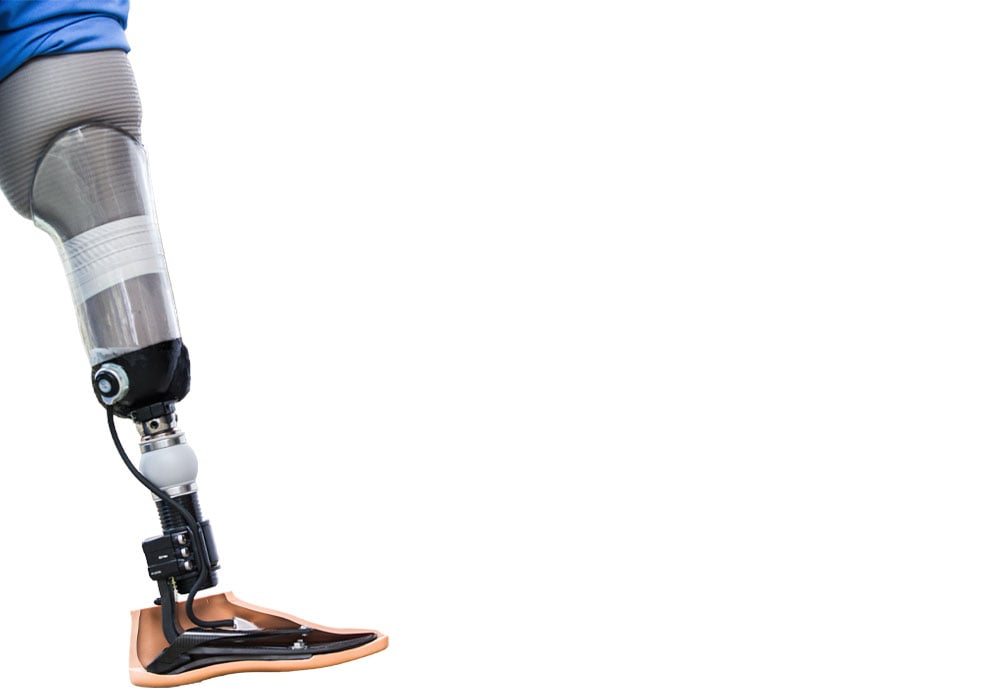
After amputation surgery, knowing how to choose your first prosthetic leg is of vital importance for individuals to regain independent movement and return to daily life. This process is not just about acquiring a physical device, but also a multi-faceted clinical evaluation that directly affects the person's quality of life. Carried out with expert clinicians, …
After amputation surgery, knowing how to choose your first prosthetic leg is of vital importance for individuals to regain independent movement and return to daily life. This process is not just about acquiring a physical device, but also a multi-faceted clinical evaluation that directly affects the person’s quality of life. Carried out with expert clinicians, this process analyzes the patient’s physical condition, expectations, and daily life habits in detail.
For individuals using a prosthesis for the first time, choosing the right components and socket systems directly impacts rehabilitation success. A wrong choice can negatively affect residual limb health and make walking training difficult. Therefore, during the clinical evaluation phase, a personalized roadmap is drawn by considering the patient’s physiological structure, muscle strength, and general health status. In the video below, you can find detailed information about the prosthetic leg selection stages and the main criteria to consider.
Table of Contents
ToggleActivity level and movement goals
To make the right choice in prosthetic technologies, it is necessary to accurately classify the individual’s level of mobility in daily life. How active a person will be after amputation is the main criterion in determining the mechanical or microprocessor-controlled components to be used. At this stage, the patient’s expectations and physical capacity must be balanced.
It is generally recommended that first-time prosthesis users start with indoor and short-distance outdoor walking, and then gradually increase their activity level. Evaluations carried out with expert physiotherapists prevent the person from setting unrealistic goals and experiencing disappointment.
Daily life goals and expectations
An individual’s daily life goal is one of the most decisive factors in prosthesis selection. While some users find it sufficient to move independently at home and meet basic needs, others aim to participate in a busy social life and active walks. In line with these goals, the functional capacity of prosthetic components is optimized.
Clearly defining goals ensures a more productive rehabilitation process. For example, the mechanical resistance levels needed by an individual who will only move indoors are different from those needed by an individual who actively works and travels. The guidance of the clinical team is of great importance during this process.
Activity level classification
In clinical practice, patients are generally classified according to different activity levels. While more stable and safe mechanical systems are preferred for individuals with low activity levels, energy-returning dynamic feet and advanced knee joints can be selected for high activity level users. This classification also plays a critical role in preventing potential complications such as why does a prosthetic leg cause wounds.
Activity level may increase over time; this may require updating or revising prosthetic components in the future. Determining the correct activity level at the initial stage accelerates the patient’s adaptation process and reinforces their sense of confidence.
Body weight and balance
Proper management of body weight and balance is one of the most sensitive points of prosthetic fit. Prosthetic legs are manufactured according to certain weight limits, and these limits must be strictly adhered to. Additionally, the shift in the center of gravity can cause balance issues for first-time prosthesis users.
To prevent balance and posture disorders, the muscle strength of the residual limb and the contralateral extremity is examined in detail. A preparation process supported by special balance exercises is planned when necessary.
Body weight and load distribution
The user’s weight directly affects the durability and carrying capacity of prosthetic components. Choosing a part with the wrong weight capacity can lead to mechanical failures and create excessive pressure on the residual limb, triggering the issue of why prosthetic leg sockets cause pain.
For correct load distribution, silicone liner choices and suspension systems within the socket must be selected with great care. Since weight changes can disrupt prosthetic fit over time, periodic clinical checks should not be neglected.
Balance and posture optimization
Balancing the center of body weight during the first prosthetic leg use may take time. Maintaining symmetry during the transition from a two-legged walking habit to unilateral prosthesis use is essential. This process is supported by special rehabilitation programs, taking into account the difference between below-knee and above-knee prostheses.
Static and algal alignment tests performed at the prosthetics center are of great importance to minimize balance problems. A correctly aligned prosthesis allows the user to use their energy efficiently and reduces fatigue.
Work and daily life
The occupational requirements of the user and their activities in social life are elements that should not be ignored when choosing a prosthetic leg. The needs of an individual working a desk job are completely different from those of an individual working actively in the field or on their feet.
The physical challenges brought about by working conditions directly affect the durability and comfort offered by the prosthesis. Therefore, the occupational profile is an integral part of the clinical evaluation.
Working conditions and occupational requirements
The sustainability of professional life depends on the prosthesis adapting to the user’s work environment. In jobs requiring continuous standing, lightweight and fatigue-preventing components are preferred, while sitting comfort and aesthetic appearance may come to the fore in an office environment.
Considering potential risks in the work environment (dust, moisture, risk of impact), external coating and mechanical protection measures should be taken. Thus, the lifespan of the prosthesis is extended and the risk of occupational accidents is minimized.
Social life and hobby compatibility
It should not be forgotten that daily life consists of more than just work, and social activities and hobbies also positively support the rehabilitation process. Flexible and high-energy-returning foot models can be evaluated for individuals who love walking, traveling, or are engaged in light sports.
Adapting quickly to social life also directly supports psychological well-being. Thanks to the right prosthesis choice, individuals feel safer in social environments.
Terrain and climate
The climatic conditions of the geographical region where the user lives and the types of terrain they step on daily affect the selection and maintenance of prosthetic components. Rugged terrains, slippery surfaces, or hot-humid weather conditions can affect the performance of the prosthesis.
At this stage, choosing materials resistant to outdoor conditions provides a great advantage in terms of long-term use comfort.
Terrain types and grip properties
Different terrain types such as asphalt, soil, sand, or marble test the slip resistance and ground grip of the prosthetic foot. Prosthetic feet with anti-slip tread structures should be preferred, especially for users moving outdoors.
Components that provide terrain adaptation allow the user to step with confidence by reducing the risk of falling. This is a great psychological relief, especially for first-time prosthesis users.
Climate conditions and sweat management
Excessive sweating can be observed in the residual limb in hot and humid climates; this can lead to slips and skin irritations in silicone liner use. In such cases, choosing breathable materials suitable for sweat drainage is of great importance.
Establishing a climate-appropriate maintenance routine plays a critical role in terms of prosthetic leg maintenance and lifespan. Regular hygiene is the basic step in protecting skin health.
Component options
The technical answer to how to choose your first prosthetic leg lies in the correct combination of main components such as the foot, knee, and socket. Each component is carefully selected and assembled according to the user’s physical data.
The table below summarizes the basic components considered when choosing your first prosthetic leg and their areas of use:
| Component Type | Main Function | Recommended User Profile |
|---|---|---|
| Prosthetic Foot | Provides ground contact and energy return | Individuals at all activity levels |
| Socket System | Connects the residual limb to the prosthesis and carries the load | All patients seeking comfort and fit |
| Knee Joint | Provides bending in above-knee amputations | Individuals using above-knee prostheses |
The harmonious working of these components directly affects walking quality. Expert technicians perform detailed measurements and simulations to determine the most suitable combination.
Foot and knee components
Prosthetic feet can have a dynamic and mobile structure as well as more stable mechanical models. In above-knee prostheses, hydraulic or pneumatic resistance joints help the user catch their natural walking rhythm.
The user’s age, height, weight, and muscle strength are taken into account when selecting components. Since wrong part selection can cause gait abnormalities and joint pain, clinical guidance must be strictly followed.
Socket and suspension systems
The socket is the most critical bridge between the residual limb and the prosthesis. A comfortable socket offers pain-free use throughout the day. Vacuum or pin-shaped silicone liner systems increase safety by ensuring the socket grips the residual limb tightly.
Taking professional measurements and making trials with test sockets are essential for correct socket design. This process ensures that potential fit problems are detected and resolved in advance.
Trial and decision process
Once all technical evaluations and measurements are completed, the trial and decision phase begins. In this process, the patient starts walking training with a temporary prosthesis and finds the opportunity to experience the performance of the device.
Trial sessions provide the most valuable data for the final prosthesis to be manufactured flawlessly. Necessary fine-tuning is done in line with the observations of the expert team.
Adaptation with a temporary prosthesis
After amputation, the volume of the residual limb shrinks and changes shape over time. Therefore, using a temporary prosthesis in the initial stage is the most accurate approach. Work done with a temporary prosthesis allows the patient to get used to the device and strengthen their muscles.
Feedback experienced during this process sheds light on the final adjustments to be made for the permanent prosthesis. Continuing the adaptation process with patience and regular exercises brings success.
Final decision and clinical follow-up
After the temporary process is successfully completed, production of the permanent prosthesis begins. Regular clinical checks continue even after the permanent prosthesis is delivered. Periodic maintenance and checks extend the lifespan of the device and prevent potential discomforts.
Continuous communication between the patient and the clinical team is the key to long-term satisfaction. Choosing the right center and expert support are the biggest helpers in this challenging process.
Frequently Asked Questions
The first prosthetic leg selection and preparation process generally ranges from a few weeks to a few months, depending on the person’s recovery speed and the stabilization of the residual limb structure. The temporary prosthesis period constitutes the most important part of this process.
When choosing a foot model, the user’s activity level, weight, and daily life goals are taken into consideration. Safe and stable foot models that increase balance during initial use are generally preferred.
Body weight directly affects the carrying capacity of prosthetic components and determines the pressure distribution within the socket. Choosing a part with the wrong weight capacity both damages the device and can lead to skin sores.
Establishing balance and adapting to the new center of gravity may seem difficult in the initial stage, but this process is overcome in a short time with regular physiotherapy and correct socket fit.