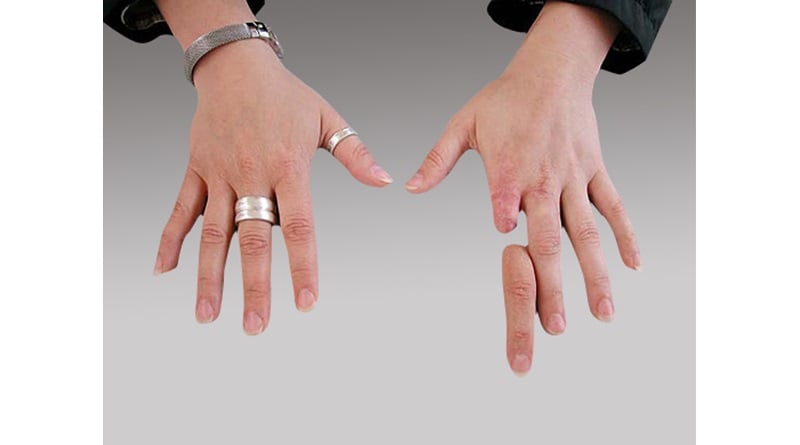
Hand and finger losses are significant health events that directly affect individuals' daily life activities and psychological well-being. A proper rehabilitation process is of great importance in losses resulting from traumas, work accidents, congenital conditions, or medical necessities. Especially prosthetic applications after finger amputation aim to help the patient regain aesthetic appearance and restore hand …
Hand and finger losses are significant health events that directly affect individuals’ daily life activities and psychological well-being. A proper rehabilitation process is of great importance in losses resulting from traumas, work accidents, congenital conditions, or medical necessities. Especially prosthetic applications after finger amputation aim to help the patient regain aesthetic appearance and restore hand functions to the maximum level. Our clinical studies show that every individual’s anatomical structure and daily life requirements are different. Therefore, the treatment plan should be personalized, and the most appropriate prosthetic technology should be selected.
Today, thanks to advancements in medical technology, the types of prostheses used for finger losses have diversified significantly. In addition to silicone solutions produced entirely compatible with the individual’s skin tone, nail structure, and finger folds, alternatives offering mechanical capabilities are also available. Together with our expert team, we evaluate our patients’ expectations after surgery and provide the most accurate guidance. You can review our page on when a silicone finger prosthesis is performed for more detailed information and processes.
Table of Contents
ToggleAmputation Level
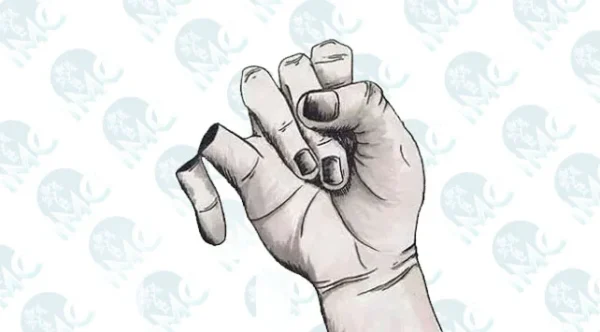
The amputation level is the fundamental criterion that determines from which joint or knuckle the finger loss has occurred. In hand anatomy, each finger consists of multiple bones: the proximal, middle, and distal phalanges. Whether the loss is at the fingertip or closer to the palm directly affects the type of prosthesis to be applied. While determining the level, the length of the remaining stump, mobility, and general skin condition are carefully examined.
Accurately analyzing the amputation level during clinical evaluations maximizes the efficiency the patient will get from the prosthesis. The sensitivity remaining on the stump, the condition of nerve endings, and the amount of soft tissue determine prosthetic fit. Going through a comprehensive evaluation at this stage plays a critical role in preventing future compatibility issues.
Distal and Middle Phalanx Losses
Distal phalanx losses, namely fingertip losses, generally stem from injuries under the nail or in the first joint region. The main goal in amputations at this level is to preserve the aesthetic integrity of the hand and support the sensitive sense of touch. Silicone applications yield very successful results for patients at this level.
In losses at the middle phalanx level, the condition of the tendons contributing to the bending movement of the finger gains importance. The remaining stump structure in this region can provide a sufficient support surface for partial hand prosthesis applications. Through measurements taken by specialists, the most appropriate design is decided while preserving the movements of the remaining part of the finger.
Proximal Level and Multiple Finger Losses
The proximal phalanx level is the region closest to the joint where the finger connects to the palm. Losses at this level can severely weaken the gripping function of the hand. In cases accompanied by multiple finger losses, the rehabilitation process requires a more comprehensive approach, aiming for the patient to actively use their hand again.
In multiple finger amputations, it is essential that the fingers work harmoniously with each other and that the ability to grasp objects is supported. At this point, solutions incorporating both aesthetic and mechanical elements are discussed. The ideal technological infrastructure is determined by considering the patient’s occupation and daily routines.
Silicone Cosmetic Options
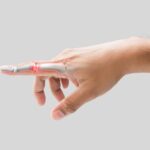
Silicone cosmetic options are the most frequently preferred visually oriented rehabilitation methods after finger amputation. Produced using high-quality silicone materials, these prostheses are custom-designed by taking an exact copy of the patient’s healthy hand. The skin tone, vascular structures, finger hair, and nail details are meticulously painted to achieve the most realistic appearance possible.
One of the greatest advantages of these prostheses is that they largely eliminate aesthetic concerns experienced in social life. Thanks to their lightweight structure, they do not cause a feeling of weight for the user and offer comfortable use throughout the day. The flexible structure of the silicone material adapts to the skin while also bringing ease of use.
Personalized Color and Texture Harmony
The most crucial stage in silicone finger production is applying pigmentation that will flawlessly match the patient’s skin color. Expert technicians hand-paint tone transitions, freckles, or spot details on the patient’s healthy finger, turning them into reality. Thus, it becomes extremely difficult to notice the prosthesis from the outside.
Texture harmony is not limited to color alone but also includes matching the nail structure with the patient’s other fingers. Nails can be painted or polished, creating a major social advantage especially for female patients. Achieving aesthetically satisfying results refreshes the patient’s self-confidence.
Silicone Comfort in Daily Life
Silicone prostheses do not restrict the user in daily activities thanks to their lightweight and soft texture. Due to their water-resistant structure, they can be easily used in routines such as hand washing, showering, or light housework. Since they are produced from skin-friendly materials, they minimize the risk of irritation even during long-term use.
Users do not experience any difficulty putting on and taking off these prostheses; they are securely fixed to the finger thanks to vacuum effect or special gripping surfaces. Offering a natural feel in daily life allows patients to adapt more comfortably to social environments. You can also review the article on how to choose the first prosthetic arm to gain broader information on the subject.
Mechanical and Functional Options
After finger amputation, the goal may be to restore not only appearance but also physical capabilities of the hand such as gripping and holding. Mechanical and functional options work by drawing power from the movement of remaining stump muscles or body movements. These systems make the patient’s life easier, especially in situations where functionality is at the forefront.
Functional prostheses may include complex joint systems and spring mechanisms. The user can bend the prosthetic finger or grasp objects by using their residual finger or wrist movements. This provides a great advantage for individuals wishing to continue their professional activities. Specialists in our clinic test the patient’s muscle strength and recommend the most suitable mechanical model.
Body-Powered Mechanical Systems
Body-powered mechanical finger prostheses operate without needing an external energy source. Remaining stump movements or wrist flexion are transmitted to the fingertips via a cable system or internal joints. Thus, the user can control the actions of holding and releasing objects with their own will.
The biggest plus of these systems is that they are durable and maintenance requirements remain at a low level. Mechanical options are a reliable helper for individuals working in jobs requiring intense manual dexterity. A short-term adaptation period may be required for the patient to get used to mechanical harmony during use.
Advanced Functional Solutions
With the advancement of technology, functional products used in finger losses have also diversified. Thanks to special springs, lockable joints, and integrated gripping surfaces, the functionality of the hand is maximized. Such prostheses are supported by special materials that prevent objects from slipping.
While selecting functional options, the patient’s muscle strength, occupation, and intensity of daily activities are analyzed in detail. A correctly planned functional prosthesis plays a decisive role in the individual’s gaining independence and active participation in business life.
Fixation
Staying securely on the stump is of vital importance for the prosthesis in terms of both comfort and functionality. Fixation methods vary depending on the amputation level and the structure of the remaining tissue. If correct fixation is not performed, the prosthesis may slip or fall off during daily use.
Fixation techniques applied in our clinic prevent skin damage while providing maximum grip. While natural vacuum effect of the skin or special medical adhesives are generally preferred in silicone prostheses, special socket designs are used in mechanical systems.
Vacuum and Skin-Contact Fixation
The most common fixation method in silicone finger prostheses is the natural vacuum formed by the inner surface’s flawless adaptation to the stump anatomy. When the prosthesis is slipped onto the finger, the air inside is expelled, and a secure hold is ensured. This method is extremely practical as it does not require extra apparatus.
In some special cases, medical-grade adhesives or special fixation bandages can also be used as support. To protect skin health, all fixation materials used are chosen from dermatologically tested products. Thus, the risk of irritation or allergic reaction is minimized even during long-term use.
Socket and Strap Systems
In mechanical and functional finger prostheses, custom-designed mini sockets or finger rings are generally used. Produced from acrylic or carbon fiber materials according to the shape of the stump, these sockets ensure that the prosthesis is securely connected to the finger.
Lightweight strap or wrist connection supports help keep the prosthesis fixed in place during multiple finger losses. A comfortable fixation system is a fundamental condition for the patient to carry the prosthesis all day without getting tired.
Appearance and Movement
The point where patients are most indecisive in choosing a finger prosthesis is the balance between visual aesthetics and physical mobility. While silicone prostheses produced purely for cosmetic purposes offer a flawless appearance, their mobility is limited. On the other hand, although mechanical options provide movement, they may not offer as natural a skin appearance as silicone.
The ideal prosthesis selection is shaped according to the patient’s personal priorities. In situations where social interactions and outward appearance are at the forefront, silicone aesthetics gain priority, whereas functional models are preferred in situations requiring manual dexterity.
Aesthetic-Focused Approaches
Aesthetic-focused approaches enable individuals to feel more confident in social life. The realistic texture offered by silicone finger prostheses is at a level indistinguishable from natural fingers when viewed from the outside. This contributes greatly to patients adapting to the process more quickly on a psychological level.
Thanks to fade-resistant paints and high-quality silicone raw materials, the prosthesis maintains its first-day appearance for many years. Easy daily maintenance also provides the user with great comfort in terms of aesthetics.
Movement and Dexterity Balance
Mobility is indispensable for the hand to perform its daily functions. Mechanical systems turn basic physical actions such as holding, gripping, and carrying objects into reality. However, the weight and outward appearance of these systems may differ compared to silicone models.
Our experts analyze the patient’s daily routines to determine the model establishing the best balance between appearance and movement. The goal is to ensure both that the patient is happy in social life and can use their hand functionally.
Selection Based on Goals
The healthiest decision in prosthesis selection is made in line with the patient’s personal goals and lifestyle. While for some users the most important criterion is that the outer appearance is flawless, for others, functionality is the priority in order to continue their profession. Evaluations made in this direction directly increase the satisfaction rate.
In consultations we carry out in our clinic, we listen to our patients’ expectations and present the most appropriate alternatives in detail. The comparison table below will help you understand the features of different prosthesis types.
Personal Expectations and Lifestyle
The user’s age, occupation, social activities, and hobbies are the primary factors influencing prosthesis selection. For example, the needs of an individual engaged in music or using their hands intensively differ from an individual working in an office environment.
A personalized evaluation process ensures that the patient finds the product they will be satisfied with in the long run. Our expert team provides guidance at every stage to support making the right decision.
Prosthesis Comparison Table
The table below summarizes the basic features of prosthetic options preferred after finger amputation:
| Prosthesis Type | Advantages | Field of Use |
|---|---|---|
| Silicone Cosmetic Prosthesis | Realistic appearance, lightweight, easy maintenance | Situations where social harmony and aesthetics are prioritized |
| Mechanical Functional Prosthesis | Gripping and holding ability, durability | Jobs requiring functionality and manual dexterity |
| Hybrid Solutions | Both aesthetic and partial movement support | Complex and multiple finger losses |
References
Frequently Asked Questions
It is expected that the wounds in the amputation area heal completely, sutures are removed, and edema largely subsides. This process is usually completed within 6 to 8 weeks after the surgical operation, and measurement taking begins.
Silicone prostheses are custom-painted to the patient’s skin color and retain their color for a long time. Since they are produced from stain-resistant special medical silicone materials, daily cleaning is quite easy.
Mechanical prostheses provide the ability to grip and hold objects, but they may have limitations for lifting very heavy loads or extremely delicate tasks. Capacity varies depending on the user’s muscle strength and the prosthesis model.
Silicone prostheses custom-produced by taking accurate measurements remain securely fixed all day thanks to the inner surface’s compatibility with the skin and the natural vacuum effect. The risk of falling off during normal daily activities is extremely low.
It is sufficient for the stitches to be removed and the wound to be closed; however, complete tissue maturation and subsidence of edema increase the comfort of the prosthesis. Your specialist doctor and technician will inform you of the most appropriate time for measurement.