prosthetic arm
Home/Prosthetic Arm

Prosthetic Arm

For individuals who have lost an arm due to accidents, illness or congenital conditions, custom-made prosthetic arm systems are designed to restore daily-life functions and improve quality of life.

Prosthetic arm systems are built as mechanical (body-powered), myoelectric, bionic or silicone cosmetic devices, depending on the amputation level, the user’s activity needs and individual goals. Every prosthesis is fully custom-made — no two are alike. A specialist evaluation is essential to determine the right system for you.
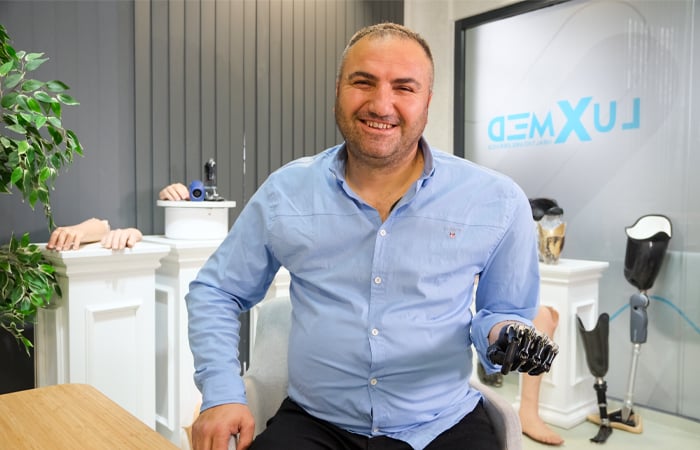
Patient using a custom prosthetic arm in daily life
2020 Licensed center since

By Amputation Level

Below Elbow or Above Elbow?

Your prosthesis is shaped by your amputation level. Understanding the difference between these two systems is the first step toward choosing the right one.
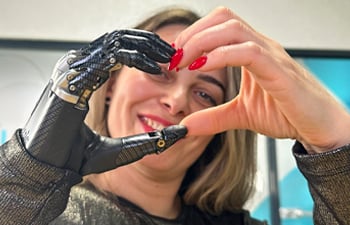
Below elbow prosthesis user
Elbow preserved

Below Elbow Prosthesis

Used when the elbow joint is intact (transradial amputation). Because your natural elbow movement is preserved, both control and adaptation are significantly faster and easier.
Natural elbow movement preserved — faster adaptation
Above elbow prosthesis general view
Elbow included

Above Elbow Prosthesis

Used when the elbow joint is also lost (transhumeral amputation). An artificial elbow joint is integrated into the system; this makes the design and adaptation process more comprehensive.
Artificial elbow integrated — expert guidance especially important

Components in both systems

Socket

The custom-molded core component that contacts the residual limb.

Both levels

Liner

A silicone or gel inner sleeve that protects skin and ensures suspension.

Both levels

Frame

Lightweight, durable structural framework connecting all components.

Both levels

Artificial Elbow Joint

Provides flexion and extension. In myoelectric systems controlled by muscle signals.

Above elbow only

Terminal Device — The Unit That Replaces Hand Function

Three terminal device options can be used at both prosthesis levels.

Mechanical

Mechanical Hand / Hook

Cable-driven, body-powered system controlled by shoulder movement. Durable and easy to maintain.

Electronic

Myoelectric Hand

Works with sensors that read muscle signals. Provides natural opening and closing motions.


By Technology Type

Prosthetic Arm Types

Different prosthetic arm systems are available based on intended use and technology level. Our specialists work with you to identify the option that best fits your needs.
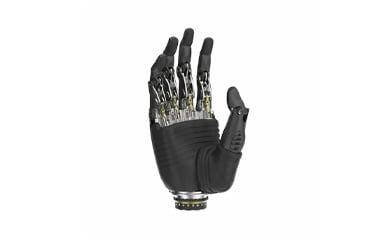
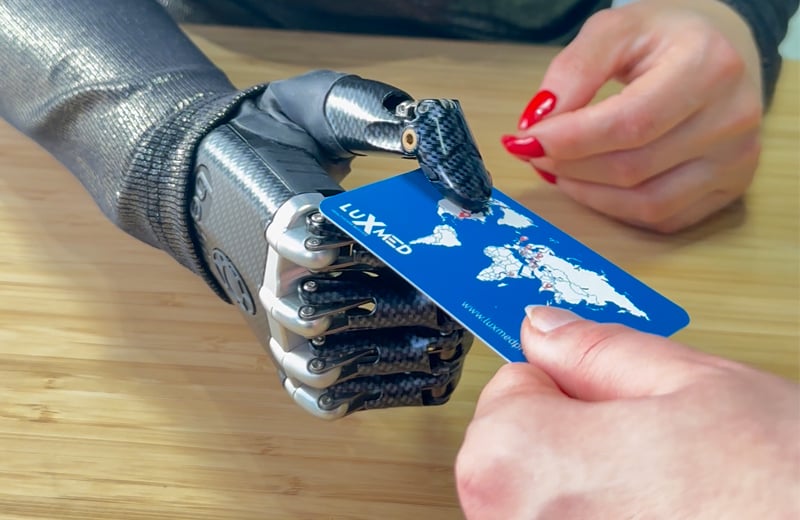
Myoelectric prosthetic arm electronic system
Myoelectric

Myoelectric Arm Prosthesis

An electronic system powered by muscle electrical signals. The most functional widely available system after the bionic class.
  • Controlled by muscle (EMG) signals
  • Natural grip and release motions
  • Compatible with bionic hand upgrades
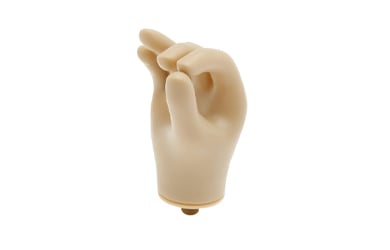
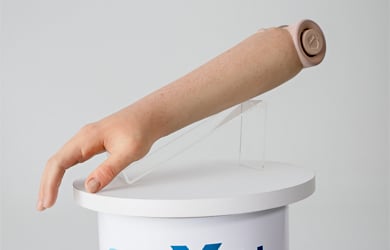
Silicone cosmetic hand prosthesis with realistic skin
Silicone / Cosmetic

Silicone Hand Prosthesis

Aesthetic appearance is the priority. Skin tone, fingerprints and vein details are individually crafted to match the user’s sound hand.
  • Custom skin-tone matching
  • Realistic fingerprint detail
  • Everyday wearing comfort
Silicone prosthesis details

Pricing Information

Prosthetic Arm Cost

Prosthetic arm pricing is determined individually. The amputation level, system type and the components selected directly shape the final cost.

Price range

€3,000  to  €80,000

Final pricing depends on amputation level, system type, component brand and your individual anatomy. A body-powered mechanical below-elbow prosthesis sits at the lower end, while an advanced bionic above-elbow system sits at the higher end.

Entry

Body-powered mechanical

from €3,000

Mid-range

Myoelectric / Silicone hand

€10,000 – €30,000

Premium

Bionic hand

up to €80,000

Factors that affect the price

Amputation level
System type
Component brand
Terminal hand chosen
Activity level
Personal anatomy

Production Process

How is a Prosthetic Arm Made?

Building a custom prosthetic arm is a precise process. From measurement to delivery, every step is carried out according to the individual’s anatomy and functional goals.

1

Evaluation & Measurement

Our specialists examine the residual limb, amputation level and anatomical structure. For myoelectric and bionic systems, muscle signal (EMG) mapping is performed to identify the strongest control points.
2

Socket Casting & Test Fitting

A custom socket is built using either a plaster cast or a digital 3D scan of the residual limb. A test prosthesis is fitted and refined based on the patient’s feedback for maximum comfort.
3

Component Selection & Programming

The terminal device — mechanical hook, myoelectric hand or bionic hand — is selected based on your goals. Sensor positions are calibrated and grip patterns are programmed for natural control.
4

Delivery & Training

The final prosthesis is delivered and personalized training is provided — including muscle-signal control for myoelectric systems. Follow-up adjustments are scheduled to ensure long-term comfort.


The Basics

What Is a Prosthetic Arm and Who Is It For?

A prosthetic arm is a custom-made artificial limb for people who have lost part of an arm or hand. It cannot fully replace the natural arm, but depending on the system it can support gripping, carrying and holding, and complete the appearance of the limb.

Upper-limb loss can result from workplace and traffic accidents, infection, tumors, vascular disease or congenital differences. The first factor that decides which system is suitable is the level of amputation.

LevelWhat it meansHow the prosthesis differs
Finger and partial handOne or more fingers or part of the hand is missing.Custom silicone finger and hand prostheses or functional partial-hand solutions are used.
Wrist levelThe loss is at the wrist; most of the forearm is preserved.The socket fits the forearm and the hand component attaches at the wrist.
Below-elbowThe elbow is preserved, with loss below it.The prosthesis has a forearm and hand component; your own elbow movement is kept.
Elbow disarticulation and above-elbowThe elbow joint is lost.An artificial elbow is added; design and fitting are more involved.
Shoulder levelThe upper arm or shoulder region is also affected.The socket sits on the trunk and joins shoulder, elbow and hand components; the solution varies greatly and needs an in-person assessment.

For a detailed comparison, read: Below-elbow vs above-elbow prosthetic arms.


Comparison

Cosmetic, Body-Powered, Myoelectric and Bionic Arms: What Are the Differences?

Prosthetic arms fall into three main groups by how they work: cosmetic (passive), body-powered (mechanical) and myoelectric. Multi-articulating "bionic" hands are the advanced class of the myoelectric group.

Scroll the table sideways to see all columns.

Cosmetic (passive)Body-poweredMyoelectricBionic (multi-articulating)
ControlNone; the hand does not moveCable pulled by shoulder and body motionMuscle signals (EMG) picked up by electrodesMuscle signals; separate motor in each finger
PowerNot neededYour own muscle effortRechargeable batteryRechargeable battery
GripNo grip; support and appearanceOpen and close (hook or hand)Usually open and close; wrist rotation can be addedSeveral grip patterns, depending on the model
StrengthsNatural appearance, light weightDurable, simple, easy to maintainNo cable or harness, natural controlFiner grip variety
Points to considerOffers no active functionNeeds a harness; more physical effortBattery, electronic servicing, moistureBattery, servicing, training and cost
Terminology: Manufacturers sometimes use "myoelectric" and "bionic" interchangeably. See Bionic arm cost in Turkey 2026 for more.

Choosing Guide

Which Prosthetic Arm Is Right for You?

The right system is not chosen on a single criterion. Your level of amputation, the condition of the residual limb, your work and daily habits and your expectations are assessed together.

  • If you do heavy or dirty work: durable, low-maintenance body-powered systems stand out; some electronic hands can be sensitive to dust, moisture and impact.
  • If you need fine hand movements: multi-articulating hands or myoelectric systems with precise control are considered.
  • If appearance and support matter most: a cosmetic prosthesis or a light myoelectric system can be considered.
  • If you have more than one need: some users use an electronic hand for daily life and a separate terminal device for work or sport.
  • For children and teenagers: sockets and components are checked more often because of growth.

More guidance: How to choose a first prosthetic arm.


Care and Lifespan

Prosthetic Arm Care, Follow-Up and Lifespan

Regular care affects both comfort and how long the prosthesis lasts. The points below are general; follow the instructions you receive at delivery for your own prosthesis.

Socket and residual limb skin

Clean the socket and liner after use and let them dry. Check the skin every day; if you see redness, sores, blisters or swelling, stop using the prosthesis and contact your prosthetic center or doctor.

Electronic components

Charge the battery as instructed. Most electronic hands are not waterproof, so check the protection rating of your model before showering or swimming.

Changes in the residual limb

Weight change, swelling and muscle loss alter the fit of the socket. If you feel tightness, looseness or pain, have it adjusted without waiting.

Follow-up and renewal

Periodic follow-up visits keep fit and electronic settings correct. Actual lifespan depends on use, the system and care.


Common Questions

Prosthetic Arm: Frequently Asked Questions

What is a prosthetic arm and how does it work?
A prosthetic arm is a custom-made artificial limb that replaces the function and appearance of a missing arm or hand. It consists of a socket that fits the residual limb, a frame, and a hand or other terminal device; above the elbow an artificial elbow is added. Body-powered systems open and close the hand through a cable moved by shoulder and body motion, while myoelectric systems read muscle signals with electrodes. Cosmetic (passive) prostheses do not move but complete the appearance.
What is a body-powered (mechanical) prosthetic arm?
It is a system worked by cables and straps. Movement of the shoulder and upper body pulls the cable and opens or closes the hand or hook. Body-powered systems are durable and simple to maintain, but they need physical effort and a harness.
What is the difference between a myoelectric and a bionic arm?
Both are controlled by muscle signals. The term bionic is usually used for multi-articulating hands in which each finger has its own motor and the hand can form several grip patterns. Standard myoelectric hands mostly open and close. The difference shows up in grip variety, training needs and cost.
What is the difference between below-elbow and above-elbow prostheses?
In a below-elbow amputation your own elbow is preserved, so the prosthesis covers the forearm and hand. In an above-elbow amputation the elbow is lost, so an artificial elbow is added to the system. Above-elbow systems are more complex and training usually takes longer.
How long does it take to make a prosthetic arm?
It depends on the type of system (cosmetic, body-powered or myoelectric), the condition of the residual limb and the number of fitting and training steps. We give an estimated timeline at the measurement visit. Electronic systems may take longer because of testing and training.
Is a prosthetic arm waterproof? Can I shower with it?
Most electronic hands are not waterproof, and moisture or water can damage the electronics. Body-powered systems and some special prostheses behave differently. The protection rating of each model is in the manufacturer's documentation, so ask at delivery. Separate solutions can be discussed for showering and swimming.
Can a prosthetic arm cause pain? What is phantom limb pain?
A well-fitting socket should not cause constant pain. Pressure points, pinching or sores mean the fit needs adjusting. After amputation, pain or sensation can also be felt in the missing limb; this is called phantom limb pain and it is common. See a doctor for phantom pain.
Can I work or drive with a prosthetic arm?
Many people return to work and daily activities with a prosthetic arm, but what you can do depends on your level, the system and your job. Driving is subject to licensing and vehicle-adaptation rules in your country; check with your doctor and the relevant authority.
Is a bionic hand suitable for everyone?
No. Suitability depends on the amputation level, the quality of the muscle signals, your daily needs and your willingness to train. Some people are better served by a simpler myoelectric hand or a body-powered system. We assess this together with you before making a recommendation.
How long do I need to train to use a myoelectric arm?
Training time varies from person to person. It includes learning to produce clear muscle signals, controlling the hand and using it in daily tasks. Most of the benefit you get from an electronic system depends on this training, so it is an important part of the process.
How long does a prosthetic arm last?
It depends on your usage, the type of system and how well it is maintained. Sockets may need adjusting or renewal earlier than the rest because the residual limb changes. Electronic components require periodic servicing and battery care.
Can children use prosthetic arms?
Yes. Children grow, so the socket and components are checked and renewed more often. The system is planned according to the child's age, development and the family's expectations.
Does insurance cover a prosthetic arm?
Turkey's social security institution (SGK) reimburses certain prosthetic arms for people insured within Turkey's general health insurance system. International patients who are not insured in Turkey usually pay privately. Cover from your own insurer varies by country and policy, so check with your insurer before treatment.
What if I only lost a finger or part of my hand?
For finger and partial-hand loss, custom silicone finger and hand prostheses or functional partial-hand solutions can be used, depending on the level and your needs. See our silicone prosthesis page for details.
How much does a prosthetic arm cost?
The cost depends on the amputation level, the system (cosmetic, body-powered, myoelectric or bionic), the components and the terminal device you choose. A clear price can only be given after an assessment. See our cost guide for bionic arms in Turkey.

This page is for general information and is not medical advice or a treatment recommendation. For cost details see Bionic arm cost in Turkey 2026. Last updated: 27 October 2026.

International Service

Our Specialists Can Come to You

You don’t need to travel across continents to receive your custom prosthetic arm. With our mobile service network covering several countries, our specialists come directly to you. Read how our prosthetic service in your country works, with videos, prices and answers to common questions.

You Don’t Have to Come to Turkey

Our specialists travel to your country on scheduled dates and conduct a free in-person evaluation and measurement.

Small Deposit Only

To reserve your appointment, only a small deposit is required upfront. The remaining balance is settled when your prosthesis is delivered.

Delivery Time Guarantee

Once measurements are taken, your finished prosthesis is delivered to your country within 2 to 8 weeks on the next visit.


    Not sure which prosthesis is right for you?

    Our specialists provide a free evaluation — in Istanbul or in your country.

    What our patients say on Google

    Google Maps rating: 4.7 / 5 from 221 reviews (October 2026).

    “We are satisfied with the prosthetic hand we ordered through Luxmed Protez.”
    — Genc H. · Google review

    Read all reviews on Google Maps

    Enes Altun, Prosthetic and Orthotic Technician

    Enes Altun

    Prosthetic & Orthotic Technician · Co-founder and Responsible Director, Luxmed Protez

    Working in orthotics and prosthetics since 2010. The information on this page has been reviewed by him. Certificates · About us