Prosthetic Leg Guide Types, Costs, and Recovery (Expert Insights)

Prosthetic Leg Guide: Types, Costs, and Recovery (Expert Insights)

Losing a limb is one of the most challenging medical experiences a person can face. However, modern prosthetic leg solutions allow millions of people worldwide to regain mobility, independence, and confidence. This article combines clinical knowledge, real patient experience, and global data to provide a complete and trustworthy guide to leg prosthetics.

What Is a Prosthetic Leg?

A prosthetic leg is a medical device designed to replace the function of a missing lower limb. Modern prosthetic legs are highly personalized systems created according to a patient’s anatomy, amputation level, physical condition, and daily activity goals.

Globally, more than 40 million people live with limb loss, and this number is expected to double by 2050 due to diabetes, vascular disease, trauma, and population aging.

Source: World Health Organization

Each year, approximately 1 million people are newly fitted with prosthetic devices worldwide.

Source: WHO, NIH

Lower-limb amputations account for the majority of cases, and more than 50 percent occur below the knee, making prosthetics for legs one of the most critical areas in rehabilitation medicine.

Source: NIH

What is a prosthetic leg anatomy: Socket,Liner,Knee Joint, Pylon, Adjustable Connector, Carbon Foot and Cosmetic Cover
What is a prosthetic leg anatomy
(Socket,Liner,Knee Joint, Pylon, Adjustable Connector, Carbon Foot and Cosmetic Cover)

Types of Prosthetic Legs Explained

Understanding different prosthetic leg types is essential for choosing the right solution. Luxmed’s clinical team has managed hundreds of cases across all major prosthetic categories, allowing us to match each patient with the most appropriate technology.

Below Knee Prosthetic Legs (Transtibial)

Below-knee systems, also known as transtibial prosthetics, preserve the natural knee joint. This results in better balance, lower energy consumption, and faster rehabilitation.

Globally, 60 to 65 percent of prosthetic leg users are below-knee amputees, and studies show that these patients regain independent walking up to 40 percent faster compared to above-knee amputees

Source: Journal of Prosthetics and Orthotics

below knee transtibial prosthetic leg
Below knee transtibial prosthetic leg

Above Knee Prosthetic Legs (Transfemoral)

Above-knee prosthetic legs require advanced knee mechanisms and more intensive rehabilitation. Microprocessor-controlled knee joints significantly improve safety and walking symmetry.

Clinical studies reported by Ottobock show that microprocessor-controlled knees significantly reduce fall incidence compared to mechanical knees, with reported reductions exceeding 80% in several patient groups.

Source: Ottobock Clinical Research

Above knee prosthetic leg components: Socket,Knee Joint,Shock Absorber, Pylon, Prosthetic Foot, Cosmetic Cover
Above knee prosthetic leg components
(Socket,Knee Joint,Shock Absorber, Pylon, Prosthetic Foot, Cosmetic Cover)

Prosthetic Leg Parts and Modern Technology

A complete prosthetic system consists of several critical prosthetic leg parts, including the socket, suspension system, joint components, foot module, and optional prosthetic leg covers for cosmetic and protective purposes.

Modern prosthetic legs often include sensors and adaptive technology that respond dynamically to walking speed, terrain, and body movement.

Patients frequently trust brands such as prosthetic leg ottobock due to their documented performance and safety standards.

prosthetic leg parts and technology

Recovery, Physical Therapy, and Returning to Normal Life

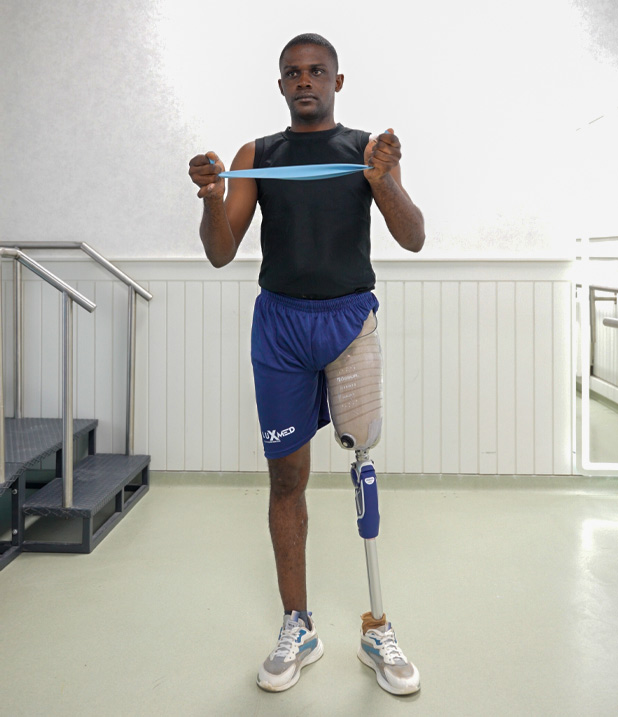
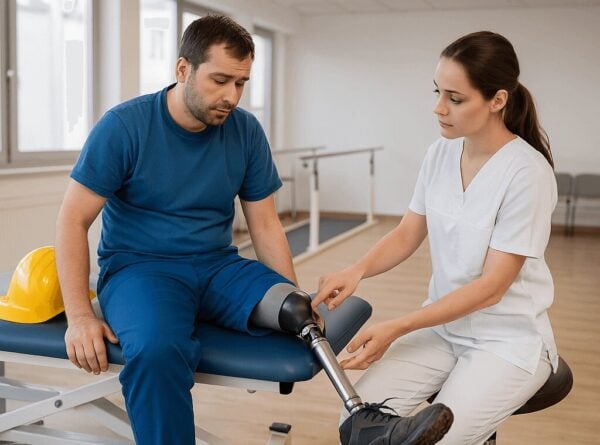
A prosthetic leg alone is not enough. Physical therapy is essential for learning balance, coordination, and proper gait mechanics. Research shows that patients who follow structured rehabilitation programs have significantly better long-term outcomes.

Based on Luxmed’s clinical experience with more than 1,500 lower-limb prosthetic patients, approximately 85 percent regain independent mobility within 2 to 6 weeks, depending on amputation level and overall health.

For many patients, using a prosthetic leg marks the beginning of returning to a normal routine rather than the end of physical ability.

physical therapy after prosthetic leg fitting
Physical therapy after prosthetic leg fitting

Luxmed Patient Experience: A Real Case

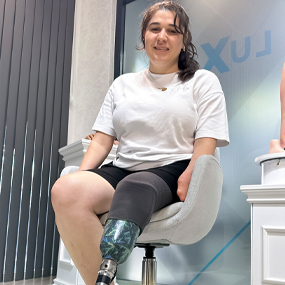
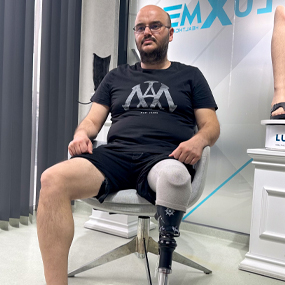
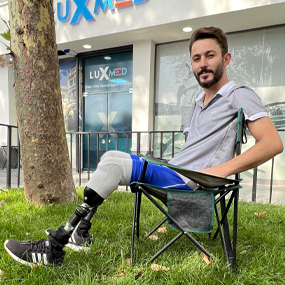
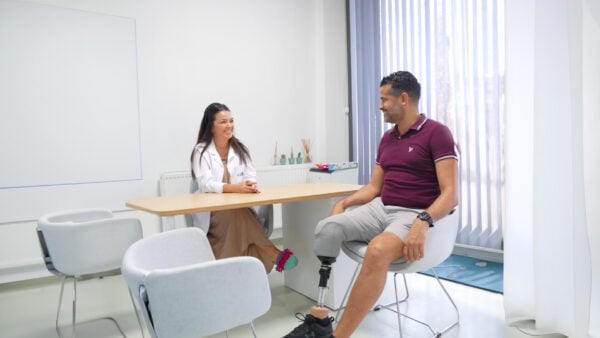
One Luxmed patient from the United Kingdom presented with a below-knee amputation and had previously been using an outdated and bulky prosthetic leg. The existing prosthesis limited both comfort and functional mobility.

At Luxmed, the prosthesis was upgraded with modern components, a custom socket was designed to fit the residual limb (stump) more precisely, and the patient was fitted with a high-performance carbon fiber prosthetic foot.

As a result of these improvements, the patient achieved more comfortable, stable, and confident walking within a short period of time, supporting a return to daily and social activities.

This case reflects Luxmed’s broader experience. Our clinic has worked with patients from dozens of countries, treating hundreds of prosthetic leg cases across a wide range of amputation levels. This exposure allows us to anticipate challenges early and deliver predictable outcomes.

Prosthetic leg patient walking confidently

Prosthetic Legs for Sports and Active Life

Prosthetic technology is not limited to basic mobility. Specialized solutions support running, fitness, and water activities.

Prosthetic running blades provide disabled individuals the ability to participate in sports and improve psychological health. Swimming is also possible using water-resistant or activity-specific prosthetic legs when properly prescribed.

 running with a prosthetic leg
Running with a prosthetic leg

Daily Life With a Prosthetic Leg

Many patients ask whether daily activities are possible with prosthetic legs. Research and real-world data confirm that:

  • Most individuals can drive with a prosthetic leg after evaluation and training
  • Right-side prosthetic leg users may require vehicle adaptations
  • Disability classification depends on national regulations rather than prosthetic use alone

Prosthetic Leg Cost and Price Breakdown

One of the most common questions is how much does a prosthetic leg cost. Globally, prices typically range between 4,000 and 80,000 EURO , depending on technology level, customization, and rehabilitation services. You can view detailed pricing on our prosthetic leg prices page.

Advanced components increase cost but often reduce long-term complications and maintenance expenses.


Maintenance, Repairs, and Comfort

Proper care is essential for comfort and durability. While minor issues may be addressed with a prosthetic leg repair kit, professional follow-up remains critical.

Clinical data shows that proper socket fit reduces pain complaints by up to 70 percent, highlighting the importance of experienced clinical assessment.


Getting and Using a Prosthetic Leg

Most patients receive their prosthetic leg within 1 to 3 weeks, depending on case complexity. Learning correct usage is part of rehabilitation.

Visit our Instagram account and witness the stories of dozens of patients from around the world. We invite you to an inspiring journey.

Click the Instagram logo


Frequently Asked Questions

Check out these questions and learn more

If you have a different question other than the ones below, you can reach us through the contact button located in the bottom right of our website

Advanced microprocessor systems such as Genium X4 represent the highest level of prosthetic technology.

Yes. Medicare does cover prosthetic legs and other medically necessary prosthetic devices when certain conditions are met. Under Original Medicare (Part B), prosthetic devices that replace a body part or function including artificial limbs such as leg prostheses are covered as durable medical equipment (DME) if they are prescribed by a Medicare-enrolled physician and obtained from a Medicare-approved supplier.

One common approach is medical crowdfunding, where patients share their story on platforms such as GoFundMe, FundRazr, or GiveSendGo to raise funds from friends, family, and the wider community. In addition, many charities and non-profit organizations provide free or subsidized prosthetic care, either internationally or within specific countries. Public healthcare systems and disability programs in some regions—such as the NHS in the United Kingdom, Medicare or Medicaid in the United States, NDIS in Australia, or national health insurance systems in parts of Europe—may also cover basic prosthetic legs for eligible individuals. Some clinics and hospitals offer financial assistance programs, payment support, or access to donated components, and adaptive sports foundations may help fund prosthetics for active or athletic users. Availability and eligibility vary by country, so patients are encouraged to explore multiple options and contact local organizations for guidance.

I thought you must be someone curious since you’re looking here. In fact, we prepared this exactly for someone curious enough to take a look 🙂

Similar Posts